

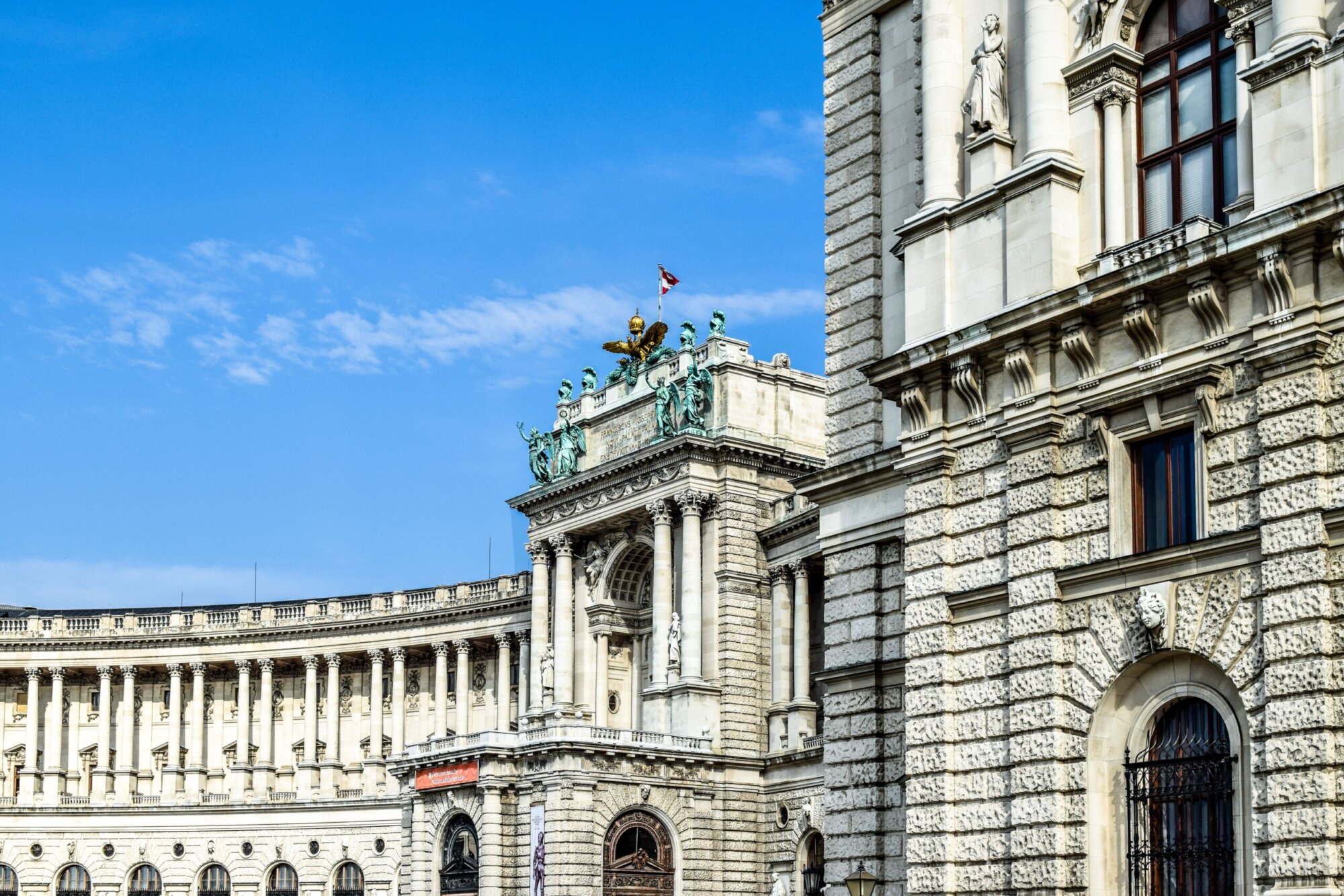
The Empty Chair

The Organization for Security and Cooperation in Europe (OSCE) is verging on a leadership crisis. No country has been selected to chair the organization in 2027. Since the chair is responsible for offering political guidance and coordinating the daily business of this organization of 57 participating States, failure to agree, by 31 December, on a country to carry out that role could create an unprecedented situation for this state-led organization.
While the OSCE has a Secretary General, the power of the organization rests with its participating States. They are the ones who meet in political bodies such as the Permanent Council (weekly) and the Ministerial Council (once a year), negotiate and take decisions, and deal with crises and conflicts.
According to standard practice, one of the 57 participating States is designated by its peers to chair the organization for one calendar year. The decision is taken by the Ministerial Council or at a Summit Meeting. As a rule (according to a decision taken at the 2002 Porto Ministerial Council), this decision should be taken two years before the Chairpersonship’s term of office starts.
But this year, in the best-case scenario, the country that is chosen to lead the OSCE in 2027 will have less than a month to prepare: Switzerland, which currently chairs the organization, hopes to reach consensus by or during the Ministerial Council in Lugano on 3 and 4 December. This is unfair to the country that will be asked to jump in at the last minute, and it is a disservice to the organization, especially at a time when it may be called upon to play a greater role in Ukraine and in helping to rebuild security in Europe.
The worst-case scenario is that no consensus is reached at the Lugano Ministerial, and negotiations continue until the last day of Switzerland’s chairpersonship. What happens on 1 January 2027 if there is no chair is uncharted territory for the OSCE.
Indeed, while the OSCE has gone without a budget or even a Secretary General in the past, it has never been without a Chair-in-Office. The closest it came to such a crisis was in late 2023, when Malta had only a few weeks to prepare for chairing the OSCE. It managed to do a good job as chair in 2024 (even while also being a non-permanent member of the UN Security Council), but this is not an ideal situation.
Candidates, but no consensus
It is not as though no country is interested in chairing the OSCE. The problem is the lack of consensus. Cyprus has been a candidate for more than a year but has been told clearly that its candidacy does not enjoy the support of all participating States. Nevertheless, the European Union, out of solidarity and principle, refuses to withdraw its support. This makes it almost impossible for another EU candidate to be considered (although the names of Ireland, and Austria have been floated in the corridors).
Georgia has also expressed an interest in chairing the OSCE in 2027, but it is also fairly clear that its bid would not enjoy consensus. There are rumours of other states, such as Kazakhstan, that could still enter the race.
As a result, Switzerland is intensifying its diplomatic efforts to find a solution.
That said, this is not only the chair’s problem. All participating States have a vested interest in having one of their peers preside over the daily business of the organization – especially if the OSCE is to recapture political relevance.
Indeed, it is said that some countries (such as the United States) are stepping up efforts to help find a chair for next year. There is even talk of a package deal that would secure leadership of the organization for the next three years. This would give much more continuity to the organization and allow for better medium-term planning. However, even identifying the chairs for 2027 and 2028 would be a big breakthrough. Otherwise, whichever country that takes over in January 2027 will be almost immediately preoccupied with finding its successor and filling the top four posts which are up for renewal or vacancy in 2027 – and this is not an attractive selling point.
What happens without a chair?
To understand the consequences of having no country in the chair, it is worth recalling the role of the Chairpersonship. It prepares, calls for, and presides over meetings. It is responsible for coordination of, and consultations on, current OSCE business. It manages the calendar of meetings. It communicates the views and decisions of participating States to the OSCE executive structures, namely the Secretariat, institutions and field activities. It represents the OSCE at international meetings and maintains contacts with the leadership of other inter-governmental organizations. It takes the lead in dealing with conflict and crisis situations and speaks on behalf of all 57 states. It also nominates the heads of the twelve field missions whose mandates have to be renewed every 12 months.
Without a chairperson, the OSCE would not immediately grind to a halt, but it would be in a precarious position. Executive structures would keep running, but without political guidance from the participating States. This would undermine the role of the chair and participating States and strengthen that of the Secretary General. But no decisions could be taken, and no meetings of the 57 could be convened. This could lead to chaos or gridlock.
Some countries hope that Austria, as host country, would step in to chair as a last resort. Others have suggested that Switzerland could continue on a temporary basis. The latter is not likely, and the former would require the support of the EU and the willingness of Austria, which will take a non-permanent seat in the UN Security Council starting in January. Therefore, such an emergency scenario is one to be avoided.
Reform the role?
The current crisis has revived discussions about reforming the role of the chair. For example, some have argued that the duration of a chairpersonship should be shortened to either four months (like in the Forum for Security Cooperation) or six (as in the EU Presidency or the Council of Europe). There is also talk of rotating the chair according to the (French) alphabetical order, with countries having the option to opt out.
It has also been suggested that annual Ministerial Council meetings could be held in Vienna (to reduce costs), while the chair could hold an informal Ministerial if necessary or desired, for example to raise the profile of the chairing state or discuss an urgent current issue.
It would be useful to explore such suggestions in the context of debates about reforming the OSCE. But there is little time or political appetite to change the Chair’s mandate in the coming weeks. Furthermore, shortening the duration of the chairpersonship could make chairing the organization less appealing to some countries, could lead to greater instability, and would require significantly strengthening support for the chairpersonship.
Don’t drop the baton
Switzerland has done a good job under difficult circumstances in getting the OSCE off life support and back on its feet. But any momentum that has been created will be in vain if it has no one to whom it can pass the baton. Furthermore, failure to agree on a chair would undermine the otherwise successful Swiss chairpersonship.
In addition, focusing on internal issues undermines the image of the OSCE at a time when it should be demonstrating its added value in fostering greater security in an unstable Europe. Therefore, participating States – not least in capitals – need to urgently agree on a country to chair the OSCE in 2027, and ideally also 2028 and 2029. The OSCE cannot afford to have an empty chair on 1 January 2027. The clock is ticking.
The author Walter Kemp is an editor of Security and Human Rights and Senior Strategic Advisor at the Geneva Center for Security Policy.

Comments
* Your email address will not be published