

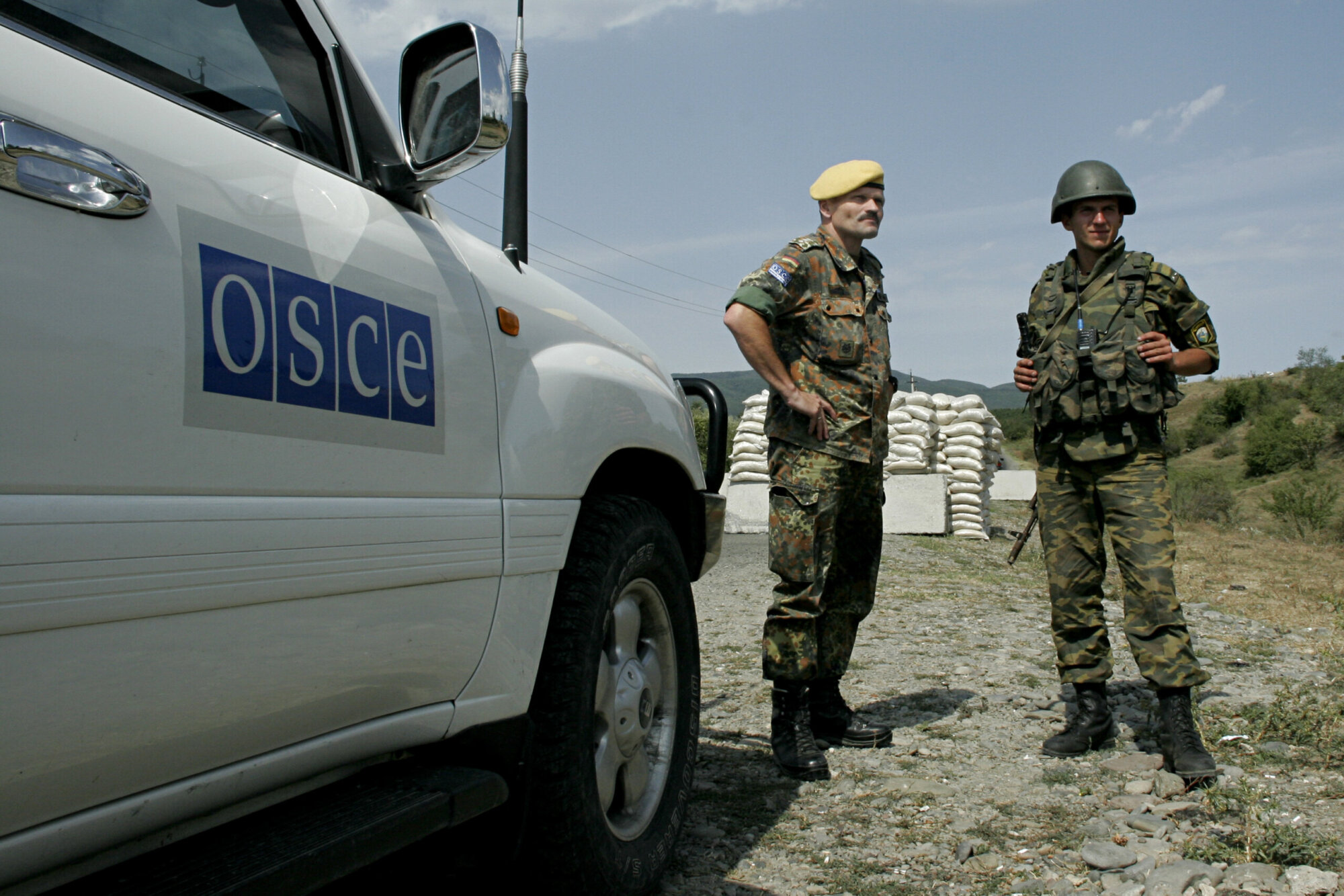
OSCE/David Khizanishvili
European Security in Flux: The OSCE’s First Dimension from Détente to Disruption


This article is part of the Special Issue on “The OSCE at 50: Reflections on security, cooperation and human rights”, published on a rolling basis between July and November 2025. The Special Issue was curated and edited by Walter Kemp and Christian Strohal, Security and Human Rights Monitor Editorial Board members and guest editors-in chief.
Fred Tanner, Ambassador (ret.), is a Faculty Associate at the Geneva Graduate Institute’s Centre for Conflict, Development and Peacebuilding (CCDP). He is also a Senior Adviser at the Centre for Strategic Analysis (CSA) in Vienna. Having been seconded by the Swiss government, Fred worked for several years at the OSCE as a Senior Adviser to the Secretary General and for the Director of the OSCE Conflict Prevention Centre.
DOI: 1058866/SXUL3604
Abstract
The article looks at the history and enduring relevance of the Organization for Security and Co-operation in Europe (OSCE)’s First Dimension, which covers politico-military issues. Tracing the evolution from the Cold War period to the current rupture, it argues that while cooperative security has yielded to deterrence, the Helsinki Final Act’s normative infrastructure remains essential for managing risk and preventing escalation. The analysis advocates a pragmatic shift toward basic risk reduction, leveraging the OSCE’s “soft” assets and adapting existing instruments—such as the Vienna Document—to address emerging technologies for example armed Unmanned Aerial Vehicles (UAVs). Ultimately, preserving the OSCE acquis provides vital tools for navigating confrontation while safeguarding the foundations for future stability.

Comments
* Your email address will not be published